Advanced Maternal Age: What Your Doctor Means

If you're pregnant or trying to conceive at 35 or older, you may have encountered the term "advanced maternal age" in your medical records or during conversations with your healthcare provider. This clinical label, while medically significant, can feel alarming, reductive, and even offensive. It's one of those medical terms that sounds scarier than the reality it describes, and understanding what it actually means, and what it doesn't, can help you approach your pregnancy with confidence rather than fear.
Women looking for an all-in-one daily supplement can explore Her Daily Formula, which provides bioavailable Folate, CoQ10, and Vitamin D specifically formulated for the conception journey.
As a reproductive endocrinologist who works with women across the age spectrum, I want to provide you with an honest, nuanced perspective on what advanced maternal age means for your pregnancy and your baby. The short version: it means your healthcare team will pay closer attention, not that you should expect problems.
Where the Term Comes From
The age of 35 was established as a clinical threshold decades ago, based on population-level data about chromosomal abnormalities and pregnancy complications. At age 35, the statistical risk of having a baby with Down syndrome, approximately 1 in 350, roughly equals the risk of miscarriage from amniocentesis, which was the primary diagnostic tool available at the time. This mathematical crossover point is how 35 became the dividing line.
The problem is that this threshold was never intended to represent a biological cliff. Fertility and pregnancy risk don't change dramatically between ages 34 and 35. The decline is gradual and continuous throughout the thirties and forties, with individual variation that makes population statistics less meaningful for any single woman. According to the National Institutes of Health, while age is a significant factor in reproductive outcomes, individual health status, lifestyle factors, and genetics all play important modifying roles.
The RESOLVE: The National Infertility Association advocates for nuanced communication about age-related fertility changes that empowers women with information rather than creating unnecessary anxiety.
What the Actual Risks Look Like
Understanding the specific risks associated with pregnancies after 35 helps put the label in perspective. These risks are real but often more modest than the term "advanced maternal age" implies.
Chromosomal Abnormalities
The risk of chromosomal conditions like Down syndrome increases gradually with age. At 30, the risk is approximately 1 in 1,000. At 35, it's about 1 in 350. At 40, it's roughly 1 in 100. These are important numbers to be aware of, but notice that even at 40, 99 percent of pregnancies do not result in Down syndrome. Modern screening methods like cell-free DNA testing (NIPT) can detect chromosomal abnormalities with high accuracy and minimal risk, providing much earlier information than the invasive tests of previous decades.
Pregnancy Complications
Women over 35 have modestly higher rates of certain pregnancy complications including gestational diabetes, preeclampsia, placenta previa, and cesarean delivery. However, many of these risks are more strongly correlated with pre-existing health conditions like obesity and hypertension than with age alone. A healthy 38-year-old without risk factors may have lower absolute risk than an unhealthy 28-year-old with multiple risk factors.
- Gestational diabetes: Affects approximately 6 to 9 percent of pregnancies in women over 35, compared to about 4 to 5 percent in younger women
- Preeclampsia: Risk increases from about 3 to 4 percent in younger women to about 5 to 7 percent over 35
- Cesarean delivery: Higher rates, partly due to medical caution and partly due to biological factors
- Miscarriage: Risk increases from about 15 percent at age 35 to about 25 percent at age 40
What Additional Monitoring Looks Like
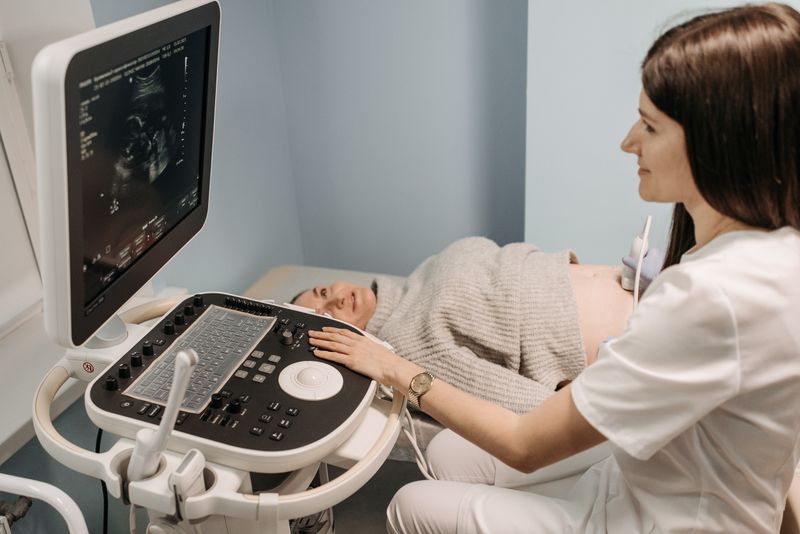
The practical implication of the advanced maternal age label is typically more monitoring, not more problems. Your prenatal care provider will likely offer additional testing and screening options that may not be routinely offered to younger patients.
Non-invasive prenatal testing (NIPT) is typically offered to all women over 35 and can screen for common chromosomal conditions through a simple blood draw as early as 10 weeks. This test has a very high accuracy rate and poses no risk to the pregnancy. Depending on your results and preferences, more definitive testing like amniocentesis or chorionic villus sampling may be offered.
You may also receive additional ultrasounds for growth monitoring, earlier screening for gestational diabetes, and more frequent blood pressure and urine checks in the third trimester. These measures are proactive rather than reactive, designed to catch any potential issues early when they're most treatable. Our article on miscarriage risk by age provides more context on early pregnancy risks, while our guide on IVF success after 40 covers assisted reproduction options for women who need additional support conceiving.
Reframing the Narrative
The term "advanced maternal age" is gradually falling out of favor among progressive practitioners, replaced by more neutral language like "pregnancy over 35" or simply a recognition of age as one factor among many. Your age is relevant information for your care team, but it shouldn't define your pregnancy experience or your identity as a mother.
The vast majority of women over 35 have healthy pregnancies and healthy babies. The additional monitoring exists as a safety net, and for most women, that net never needs to catch anything. Approach your prenatal care as a partnership with your provider: be informed, ask questions, participate in shared decision-making, and trust that your body is capable of extraordinary things.
The Her Fertility Boost supplement provides targeted nutritional support for women over 35 who are trying to conceive, ensuring your body has the building blocks it needs for a healthy pregnancy. Our article on preeclampsia in older mothers provides detailed information on one of the conditions that's monitored more closely, while our prenatal testing over 35 guide walks you through your screening options.
You are not too old. You are exactly the right age, because this is the age at which you've decided to become a mother. And that decision, made with wisdom, intention, and love, is the strongest foundation any child could ask for.



Ready to Start Your Journey?
Take our 30-second quiz to find the insemination kit designed for your specific situation.
Find Your Kit