Basal Body Temperature Tracking Guide
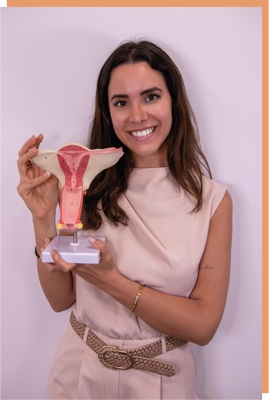

Basal body temperature tracking is one of the oldest, most accessible, and most scientifically grounded methods for understanding your menstrual cycle and identifying when ovulation occurs. It costs almost nothing, requires just a few minutes each morning, and over time gives you a detailed map of your body's hormonal rhythms. As an advocate who has used every fertility tracking method out there, I can tell you that BBT charting is not glamorous, but it provides information that no other method can, and when combined with other indicators, it becomes a powerful tool for optimizing your conception timing.
How Basal Body Temperature Relates to Ovulation
Your basal body temperature is your lowest body temperature in a 24-hour period, occurring during complete rest, typically first thing in the morning before any activity. Throughout the first half of your menstrual cycle (the follicular phase), BBT tends to stay in a lower range, typically between 97.0 and 97.7 degrees Fahrenheit. After ovulation, progesterone produced by the corpus luteum causes a sustained temperature shift upward, usually by 0.3 to 0.6 degrees, into the range of 97.7 to 98.3 degrees Fahrenheit.
This temperature shift confirms that ovulation has occurred. The rise typically happens one to two days after ovulation and persists throughout the luteal phase until your next period begins or, if conception occurred, throughout early pregnancy. This is the fundamental principle behind BBT tracking: the temperature pattern tells you whether you ovulated and approximately when it happened.
According to the American Society for Reproductive Medicine, BBT charting is a recognized method for confirming ovulation and can be a valuable complement to other fertility awareness tools.
Getting Started: What You Need
BBT tracking requires minimal equipment and setup, which is part of its appeal. Here is what you need to begin.
A Basal Body Thermometer
Standard fever thermometers do not measure to the precision needed for BBT tracking. You need a basal body thermometer that reads to two decimal places, such as 97.42 degrees Fahrenheit. These are inexpensive and widely available at pharmacies and online. Digital thermometers with memory functions are convenient because they store your reading if you fall back asleep before recording it.
Some newer options include wearable temperature sensors that track your temperature continuously overnight and sync with an app. These eliminate the need to remember to temp at the exact same time each morning and can provide more nuanced data, though they come at a higher price point.
A Recording Method
You need a way to record your daily temperature and identify patterns over time. Options include dedicated BBT charting apps, fertility tracking apps that incorporate BBT data, or a simple paper chart. Digital apps are convenient because they can interpret your data, identify your temperature shift, and integrate BBT with other fertility indicators like ovulation predictor kit results and cervical mucus observations.
How to Take Your BBT Correctly
Consistency is everything with BBT tracking. Small variations in technique can create noise in your data that makes the ovulation signal harder to identify. Follow these guidelines for the most reliable readings:
- Take your temperature at the same time every morning, with no more than 30 minutes of variation. Set an alarm if needed
- Take it immediately upon waking, before sitting up, talking, checking your phone, or getting out of bed. Movement and activity raise your temperature
- Use the same measurement method consistently: oral, vaginal, or rectal. Oral is most common, but vaginal or rectal readings tend to be more stable and less affected by mouth breathing or sinus congestion
- Get at least three consecutive hours of sleep before taking your temperature for the most reliable baseline
- Note any factors that might affect your reading, such as illness, alcohol consumption the night before, poor sleep, or using an electric blanket
For information on how stress can affect your cycle and temperature patterns, see our article on ovulation predictor kit guide, and for understanding unexplained temperature variations, our guide on unexplained infertility addresses factors that can make cycle tracking more challenging.
Reading Your BBT Chart
The goal of BBT charting is to identify the biphasic pattern: lower temperatures in the first half of your cycle and higher temperatures in the second half, with a clear shift marking ovulation. Here is how to interpret what you see.
The Pre-Ovulation Phase
During the follicular phase, your temperatures will fluctuate day to day but generally stay within a lower range. Establishing this baseline over several days of each cycle is important because the temperature shift is relative, meaning it is defined by the increase above your personal baseline, not by reaching a specific number.
The Temperature Shift
After ovulation, you should see your temperature rise and stay elevated for at least three consecutive days. Many tracking methods use a coverline, a horizontal line drawn just above the highest of the six temperatures preceding the shift. Once three temperatures appear above this coverline, ovulation is considered confirmed.
The Luteal Phase
Post-ovulation temperatures should remain elevated for 10 to 16 days. If your luteal phase is consistently shorter than 10 days, this may indicate a luteal phase deficiency worth discussing with your doctor. If temperatures remain elevated for 18 or more days and your period has not arrived, a pregnancy test is warranted.
Limitations and How to Compensate
BBT tracking has one significant limitation: it confirms ovulation after the fact. By the time you see the temperature rise, ovulation has already occurred, and the fertile window may have passed. This means BBT alone is not ideal for timing insemination in real time.
The solution is to combine BBT tracking with methods that predict ovulation before it happens, specifically ovulation predictor kits and cervical mucus monitoring. OPKs detect the LH surge that precedes ovulation by 24 to 36 hours, giving you a real-time signal to inseminate. BBT then confirms that ovulation actually occurred, closing the feedback loop. Over several cycles, your BBT pattern also helps you predict the approximate timing of ovulation in future cycles.
A supplement like His Fertility Boost supports sperm quality to complement your optimized timing efforts, ensuring that both sides of the conception equation are addressed.
The Centers for Disease Control and Prevention acknowledges fertility awareness methods as valid tools for conception planning and recommends using multiple indicators rather than relying on any single method.
BBT tracking asks for discipline and consistency, but in return it gives you something invaluable: objective, physiological data about your own body's reproductive rhythms. Over time, you will develop an intimate understanding of your cycle that empowers every fertility decision you make. That knowledge is yours, it is free, and no app or test can replicate the depth of understanding that comes from months of careful observation. Trust the process, be patient with the learning curve, and know that every morning you record your temperature, you are one data point closer to understanding exactly how your body works.



Ready to Start Your Journey?
Take our 30-second quiz to find the insemination kit designed for your specific situation.
Find Your Kit