Understanding Your Menstrual Cycle for Conception

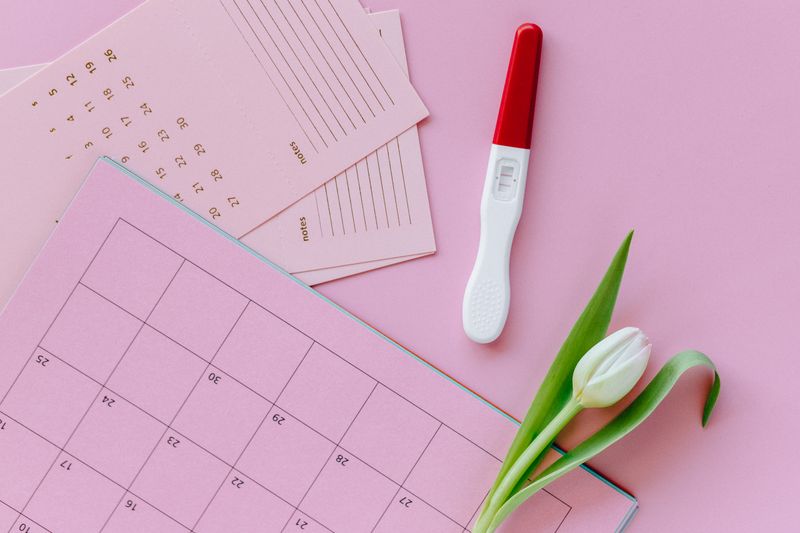
Your menstrual cycle is far more than just a monthly period. It is a complex, beautifully orchestrated sequence of hormonal events that creates the conditions for conception. Understanding each phase of your cycle gives you a significant advantage when trying to conceive, because it allows you to identify your most fertile days with precision rather than guesswork. Whether you are planning for at-home insemination or simply want to optimize your chances naturally, this knowledge is your most powerful tool.
The Four Phases of Your Menstrual Cycle
Most people think of the menstrual cycle as simply having a period, but it actually consists of four distinct phases, each governed by different hormones and each playing a specific role in preparing your body for potential pregnancy. A typical cycle lasts 28 days, though anywhere from 21 to 35 days is considered normal. What matters most is not whether your cycle matches the textbook exactly, but that you understand your own unique pattern.
The first phase is menstruation itself, which typically lasts three to seven days. This is when the uterine lining from the previous cycle is shed. While it may feel like a biological reset, your body is already preparing for the next opportunity. Even during your period, follicle-stimulating hormone (FSH) is beginning to rise, signaling your ovaries to start developing follicles for the next cycle.
Understanding that your body is always working toward the next fertile window, even during menstruation, can shift your perspective from seeing your period as an inconvenience to recognizing it as part of a continuous cycle of possibility.
The Follicular Phase
The follicular phase begins on the first day of your period and lasts until ovulation. During this time, FSH stimulates several follicles in your ovaries to begin growing. Eventually, one dominant follicle emerges and continues to develop while the others recede. This dominant follicle produces increasing amounts of estrogen, which triggers the thickening of your uterine lining in preparation for a potential embryo.
As estrogen levels rise, you may notice changes in your cervical mucus. It gradually becomes clearer, more slippery, and stretchy, resembling raw egg whites. This fertile-quality cervical mucus is essential because it creates a hospitable environment for sperm, helping them travel through the cervix and toward the egg. Learning to recognize these mucus changes is one of the most reliable ways to identify your approaching fertile window. Our guide on ovulation tracking methods covers this in detail.
Ovulation
Ovulation is the main event. A surge in luteinizing hormone (LH) triggers the dominant follicle to release a mature egg into the fallopian tube. This typically happens around day 14 of a 28-day cycle, but can vary significantly from woman to woman and even from cycle to cycle. The egg is viable for only about 12 to 24 hours after release, which is why timing is so critical for conception.
The LH surge that precedes ovulation is exactly what ovulation predictor kits (OPKs) detect. When you get a positive OPK reading, it means ovulation is likely to occur within the next 24 to 48 hours. This is your signal to inseminate or time intercourse for the best chance of conception. The American Society for Reproductive Medicine notes that the day before and the day of ovulation represent the highest probability of conception.
The Luteal Phase
After ovulation, the empty follicle transforms into a structure called the corpus luteum, which produces progesterone. This hormone stabilizes the uterine lining and creates the warm, nutrient-rich environment needed for embryo implantation. The luteal phase typically lasts 12 to 14 days and is remarkably consistent for each individual woman, even when the follicular phase varies in length.
If fertilization and implantation occur, the developing embryo produces human chorionic gonadotropin (hCG), which signals the corpus luteum to continue producing progesterone. If pregnancy does not occur, the corpus luteum degrades, progesterone drops, and the uterine lining is shed, beginning a new menstrual cycle.
Identifying Your Fertile Window
Your fertile window is the span of days during which conception is possible. While the egg only lives for about a day, sperm can survive in the reproductive tract for up to five days under optimal conditions. This means your fertile window is approximately six days long: the five days leading up to ovulation and the day of ovulation itself.
To identify your fertile window accurately, consider combining multiple tracking methods:
- Ovulation predictor kits detect the LH surge 24-48 hours before ovulation
- Basal body temperature tracking reveals a temperature rise after ovulation has occurred
- Cervical mucus monitoring shows changes in consistency as ovulation approaches
- Cycle tracking apps use algorithms to predict fertility based on your historical data
- Hormone monitoring devices measure multiple hormones for a more complete picture
Using two or more of these methods together gives you the most reliable prediction. For example, cervical mucus changes can alert you that your fertile window is opening, while an OPK confirms that ovulation is imminent. This layered approach is especially valuable when you are using donor sperm or planning insemination, because each vial or attempt represents a significant investment.
How Hormonal Imbalances Affect Your Cycle
Not every cycle runs like clockwork, and that is more common than you might think. Hormonal imbalances can affect ovulation timing, cycle length, and fertility. Conditions like polycystic ovary syndrome (PCOS) can cause irregular or absent ovulation, while thyroid disorders can disrupt the entire hormonal cascade that governs your cycle.
If your cycles are consistently shorter than 21 days, longer than 35 days, or highly irregular, it is worth discussing with your healthcare provider. The Centers for Disease Control and Prevention reports that ovulatory disorders account for a significant portion of fertility challenges, but the encouraging news is that many of these conditions respond well to treatment.
Even with irregular cycles, conception is absolutely possible. It may require more vigilant tracking and potentially some medical support, but understanding your hormonal patterns is the first step toward finding solutions. Supplements like those in the Impregnator Kit can support overall reproductive health, while products like His Fertility Boost address the often-overlooked male side of the equation.
Cycle Tracking for At-Home Insemination
When you are planning at-home insemination, cycle tracking takes on added importance because you need to coordinate sperm availability with your fertile window. If you are ordering frozen donor sperm, you will need to have it delivered and ready before your LH surge. If you are working with a known donor, scheduling needs to align with your ovulation.
Start tracking at least three cycles before your first insemination attempt. This gives you a reliable baseline for your typical cycle length, the day your LH surge tends to occur, and how your cervical mucus patterns change throughout the month. With this data, you can plan ahead with much more confidence. Some women find it helpful to track their cycles alongside fertility myths they may have believed, and our article on fertility myths debunked can help separate fact from fiction.
Consider keeping a simple fertility journal or using a dedicated app to record your daily observations. Note your cycle day, any OPK results, cervical mucus quality, basal body temperature if you are tracking it, and any symptoms like mittelschmerz (ovulation pain) or breast tenderness. Over time, these records reveal your unique pattern and make each subsequent cycle easier to predict.
When to Seek Additional Support
Understanding your menstrual cycle is empowering, and for many women, it is all the information they need to conceive successfully. However, if you have been tracking diligently and timing inseminations accurately for six or more cycles without success, it may be time to explore further. An OPK guide and deeper hormonal testing can provide insights that basic tracking cannot, and your provider can help determine whether additional interventions might be beneficial.
Knowledge of your cycle is not just useful for conception. It is a form of self-awareness that serves you throughout your reproductive life. Whether you conceive this month or several months from now, the understanding you build today will support you at every step. Your body has an incredible capacity for creation, and the more attuned you are to its rhythms, the better positioned you are to work with it rather than against it.


Ready to Start Your Journey?
Take our 30-second quiz to find the insemination kit designed for your specific situation.
Find Your Kit