At-Home Insemination vs Clinic: Which Is Right for You
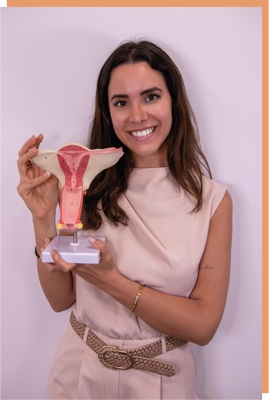

The question of whether to inseminate at home or at a clinic is more than a logistical choice. It touches on your comfort level, your budget, your specific fertility situation, and your personal values around privacy and autonomy. Having done both, I can tell you from experience that each has genuine advantages, and the right choice depends entirely on your individual circumstances. This guide gives you the honest comparison you need to decide with confidence.
The Case for At-Home Insemination
At-home insemination has grown enormously in popularity, and the reasons go beyond simple convenience. For many women, the home environment offers benefits that a clinical setting simply cannot match.
Privacy and emotional comfort are the most commonly cited advantages. Your bedroom is a place where you feel safe, relaxed, and in control. There are no fluorescent lights, no paper gowns, no clinical stirrups, and no stranger performing the procedure. This sense of comfort and agency is not just about preference; it can genuinely support better outcomes. Research shows that stress hormones can interfere with reproductive processes, and a relaxed environment naturally reduces stress.
Cost is another major factor. At-home insemination with a kit like the Impregnator Kit costs a fraction of what the same procedure costs at a clinic. A typical at-home ICI cycle costs $50 to $200 for supplies (plus the cost of donor sperm if applicable), compared to $300 to $1,000 for the clinic procedure fee alone, before monitoring and additional charges. Over multiple cycles, these savings can amount to thousands of dollars.
Additional advantages of at-home insemination include:
- Complete control over timing, no scheduling around clinic hours
- Ability to inseminate immediately upon detecting your LH surge, day or night
- Partner involvement in a meaningful, intimate way
- No travel time or waiting room stress
- Freedom to create rituals and practices that feel personally meaningful
The Case for Clinic Insemination
Clinical insemination offers advantages that are genuinely important for certain patients and situations. The primary clinical advantage is the option for intrauterine insemination (IUI), which places sperm directly into the uterus, bypassing the cervix entirely. This is something that cannot be done safely at home and requires a trained medical professional.
IUI can provide meaningfully higher per-cycle success rates compared to at-home ICI, particularly for women with cervical mucus issues, when using frozen sperm with lower motility counts, or when combined with ovulation-stimulating medications. The professional monitoring that accompanies clinic procedures, including ultrasound tracking and blood work, also provides valuable information about how your body is responding to treatment.
Clinical insemination is particularly appropriate when:
- You have known cervical factor issues
- You are using sperm with lower motility counts that benefit from direct uterine placement
- You want the additional monitoring that clinical oversight provides
- At-home insemination has not succeeded after several well-timed cycles
- You have conditions that require medical supervision during insemination
According to RESOLVE: The National Infertility Association, both at-home and clinical insemination are legitimate paths to conception, and the choice should be based on individual circumstances rather than a blanket recommendation.
Success Rate Comparison
The success rate comparison between at-home and clinic insemination is nuanced and depends heavily on which specific procedures you are comparing.
At-home ICI versus clinic ICI shows very similar success rates (10-15% per cycle for both) because the procedure is essentially the same, just performed in different locations. The setting does not significantly affect the biological outcome when technique and timing are comparable.
At-home ICI versus clinic IUI shows a modest advantage for IUI (roughly 15-20% per cycle versus 10-15% for ICI), attributed to the intrauterine placement bypassing the cervix. However, when you factor in cost per cycle, the cumulative odds over multiple cycles can be comparable. Three home ICI cycles at $200 each versus one clinic IUI at $2,000 gives you three chances to conceive for the same investment.
The most important variable in success is not the location but the timing. A perfectly timed at-home insemination will outperform a poorly timed clinic procedure every time. The American Society for Reproductive Medicine emphasizes that insemination timing relative to ovulation is the single most impactful factor regardless of setting.
A Practical Approach: Start at Home, Escalate if Needed
Many fertility professionals and experienced women recommend a graduated approach: start with at-home insemination for three to six cycles, and if that does not succeed, transition to clinic-based IUI. This approach respects your budget by starting with the least expensive option, your body by avoiding unnecessary medical intervention, and your timeline by not delaying action.
If you choose this graduated approach, use the at-home cycles not just as conception attempts but also as learning opportunities. Track your response to timing, note what felt comfortable and what felt awkward, and refine your technique with each cycle. This experiential knowledge makes any subsequent clinical cycles more productive because you arrive with a deep understanding of your own cycle patterns.
Our guides on using an insemination kit and comparing insemination kits provide practical guidance for the at-home approach, while our articles on insemination positioning and insemination with fresh sperm cover technique optimization regardless of setting.
Emotional Considerations
Beyond the clinical and financial comparison, the emotional dimension deserves attention. Some women feel more confident knowing that a medical professional is handling the procedure, and that confidence can support relaxation and positive outcomes. Others feel anxious in clinical settings and find that the home environment allows them to be more present and calm.
If you have a partner, at-home insemination often feels more inclusive and intimate. The partner can be actively involved in the process, creating a shared experience that clinic settings typically do not allow. For single women, at-home insemination can feel empowering because you are taking full ownership of your fertility journey on your own terms.
Whether you inseminate at home or at a clinic, you are taking a powerful, proactive step toward motherhood. Both paths lead to the same destination, and choosing the one that aligns with your comfort, your budget, and your medical needs is a decision that deserves respect. There is no wrong choice here, only the choice that is right for you.



Ready to Start Your Journey?
Take our 30-second quiz to find the insemination kit designed for your specific situation.
Find Your Kit